
In Defense of Physical Media
Introduction
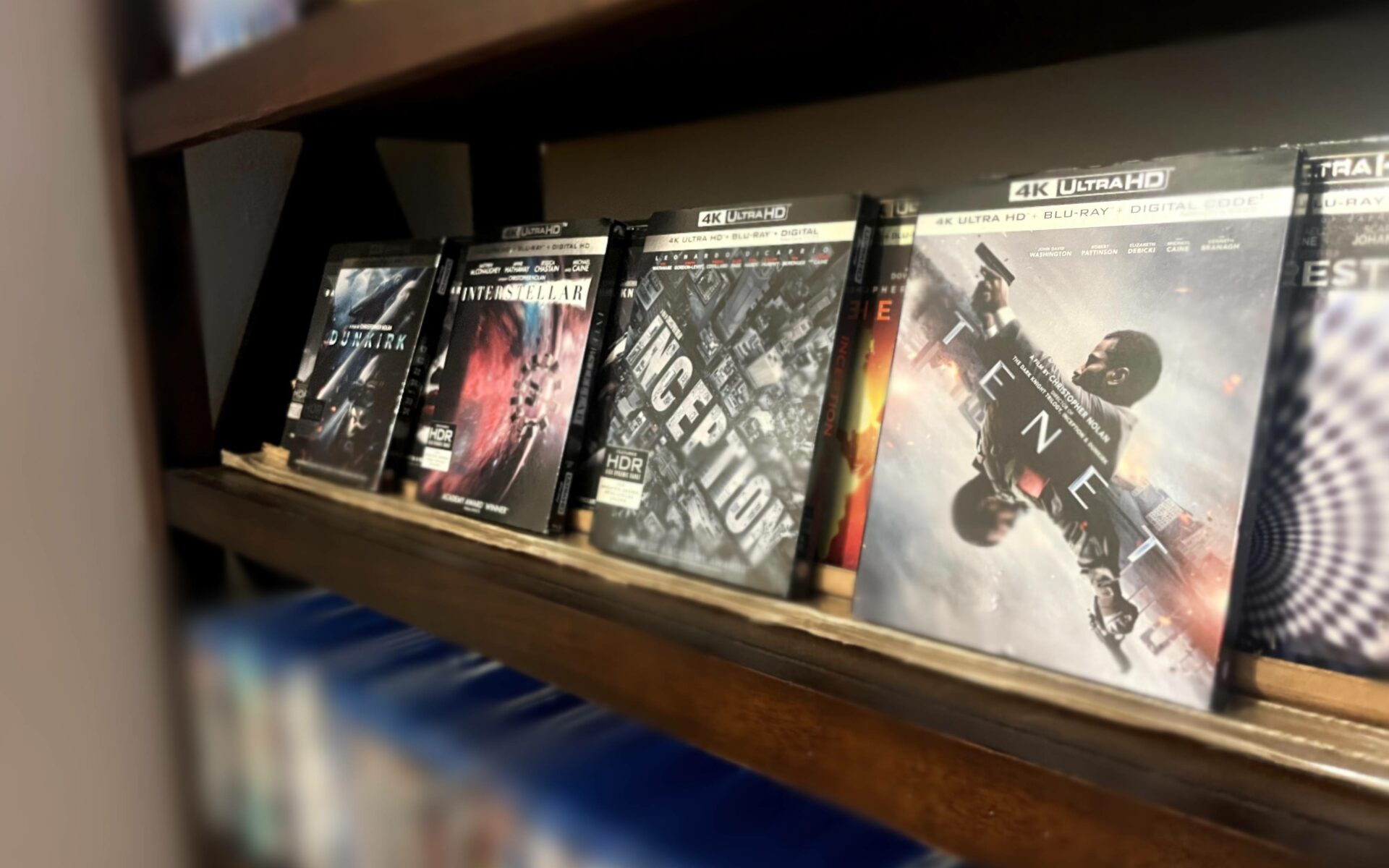
One big aspect of my love of movies is how much I enjoy collecting them. I have a shelf in my home that displays every movie I’ve ever bought. I get excited about new movies releasing on Blu-ray and seeing what visual art the studio used on the cover. I love collecting rare editions of my favorite films, and a lot of these I display on the shelf with the cover facing outwards.
My love of physical media extends far beyond just wanting to collect my favorite films and check them off a list. As streaming services grow (both in catalog and in price) physical media is dwindling. How often do we hear online or in conversation about how much people miss things like Blockbuster?
This article will summarize my thoughts on why physical media is so important and why we should work to save it. It’s no secret that physical media is becoming a thing of the past. Blockbuster was just the beginning. Even stores like Best Buy, Barnes and Noble, and other media retailers have either completely stopped selling films and music or have drastically scaled back their selection. Physical media is a wonderful thing, and something I hope people will begin to take seriously again. If physical media is something you haven’t put a lot of thought into, I hope these points will spark some new considerations.
The Quality of the Product
For those who care about how the details in movies look, or the subtlety and depth in how music sounds, owning these things physically will always look and sound superior to how they are streamed. In order for movies or music to be streamed over the internet, the files themselves are compressed. To put it in mathematical terms, a physical 4k movie contains upwards of 100 GB of storage, while that very same movie on streaming only takes up 5 to 10 GB. Streaming services have to be able to do this in order for thousands of people to be accessing movies across the entire world to that company’s computer servers.
This data compression lowers sound quality, blurs intricate detail, reduces stark lighting differences, and removes smoothness in fast paced action. Film directors and music produces spend countless hours getting their product to look and sound a very specific way. To exclusively interact with their product in a way that alters their intention is a disservice to their work and the work of hundreds or thousands of other people who helped create the movie and music you’re watching and listening to.
In addition to data compression, streaming services also often choose to edit films in more specific ways in order to better suit their own needs. They’ll change the aspect ratio without giving you the option of viewing it the way the director intended, they’ll edit out scenes they deem not as important in order to fit within a shorter viewing window, and they’ll specifically control color resolution in ways beyond the natural consequences of data compression. This will never happen with Blu-rays. Once you buy it, it can’t be messed with.

The Permanence
Another important aspect of physical media is its permanence. Once you buy a movie or an album, it’s yours forever. People are hesitant to the idea of buying a movie for $10 when you get access to hundreds for around $10 every month, but nothing about those films online have any true connection to you. Even if you have paid for streaming for a decade, the second you stop paying, you lose complete access to those movies.
Buying movies and music physically sounds expensive, but I’m not convinced it’s much more expensive than what the average person spends on streaming every month. Netflix, Disney+, HBO Max, Amazon Prime, and Apple TV combine for $82 a month, and that’s just 5 services. Most people pay for far more. After taxes, that comes out to over $1000 a year, just to have access to these movies and shows for a temporary time.
The argument is you have thousands of films to choose from, but who truly is able to use that to their advantage? Not to mention these prices are always changing. Disney+ has more than doubled its original price since it began. Services will continue to get more and more expensive.
Even spending half of that thousand dollars a year on physical movies would get you dozens, and you would own them for the rest of your life. And even if you decide to pay for streaming just to watch your favorites, there is no guarantee they will stay on any particular service. Contracts between the studio and the streaming service are ever-changing, and one day you could wake up to find your favorite film not available. Additionally, streaming services routinely will remove films and tv shows from their catalogs because they are able to file it as a tax write off.
With physical media, your ownership of the product is never in question. As Christopher Nolan put it, it’s important to own movies on Blu-ray so that “no evil streaming service can come steal it from you.”

Supporting the Industry
The world we live in is full of sequels, prequels, remakes, and spin-offs, but have you ever wondered why that is? Simply put, films made from existing IPs on average make substantially more money at the box office. DVD and Blu-ray sales used to account for a huge portion of revenue for movie studios. For example, if a film made a hundred million dollars at the box office, typically it would make about a hundred million more several months later when the DVD released. This better and more consistent stream of revenue allowed studios to take bigger risks on original ideas.
With DVD sales accounting for a fraction of what they used to, studios have to make all their money back on the front end. Want to see more original ideas and less remakes? The studios won’t budge until the number start moving, so it’s important to see these films in theaters and buy them when they release.
Having a Collection
This point is more anecdotal than the others I’ve made, but another reason to invest in physical media is simply because it’s fun to personalize your own collection of movies and music that you enjoy. I read somewhere that this person was asking for a streaming service that you can hand select the films you pay for so you don’t have to waste your time surfing for hours on end. I wanted to throw my laptop across the room. That’s exactly how it is owning your favorite movies!
Whether it be films from your favorite director, your favorite movie series, one artist’s complete discography, or anything else, you can own them and never worry about having a film or album you don’t like.
The collection aspect of physical media is what got me interested in it in the first place. I love researching all the different types of releases that a film got, whether it be DVD, Blu-ray, 4k, specific collector’s editions, or anything else. I love buying the edition with my favorite cover art, and I love displaying my favorite films in a way that highlights them over the others I own. As an example, the films I choose to display on their own stand are the Middle Earth films, the Star Wars series, and Christopher Nolan’s filmography.

Community
The final point I’ll make is about the sense of community in owning physical media. As streaming services continue to crackdown on password sharing, lending movies is becoming more and more difficult. With physical media, you can let anyone borrow a movie or album with no headache. My friends and I borrow each other’s movies regularly, and it always comes with a sense of sincerity and fun. Knowing people interested in physical media also makes for incredibly easy birthday and Christmas gifts. Collections are representative of the enjoyments of those who built them, and learning those interests about those around you can lead to both interesting conversation and easy and fun gift giving.
When we choose to own films and music physically, we become a part of something that feels intrinsically different than streaming. There’s something about opening a movie from its case and putting it in your dvd player that’s more real than doing it online. It’s more intentional than mindlessly scrolling through Netflix for an hour trying to decide what to watch. For me the difference is as stark as an eBook vs a paperback. The content may be the same, but something about the form being more authentic makes the experience of the content even better.
Conclusion
Though the examples I’ve given throughout this article were about film, these principles are just as true in a broader sense. The value of physical media extends to music and books as well. Having hundreds of books on your eReader can be convenient, and having hundreds of albums saved to your library on Spotify is easy, but that isn’t something you can leave behind. Pieces of media, whether it be old films, old books, or old vinyls, can become wonderful mementos. It’s saddening to think these things could subside over time.
Physical media is important because at its core it is a preservation of art, but it’s also a type of preservation that is being lost. If you’ve never thought twice about it, you certainly aren’t alone, and I hope a point or two I’ve made has given you something to think about. If you collect in any capacity, we’d love to hear from you down in the comments. And if you have any specific questions about my personal selection I’d be more than happy to answer anything.

- Every NEEDTOBREATHE Title Track, Ranked - March 18, 2026
- 2025 Music Review - February 2, 2026
- The Force Awakens Revisited (10th Anniversary) - December 18, 2025
Discover more from Rambling Ever On
Subscribe to get the latest posts sent to your email.

Well, I’m gonna go buy a bunch of Blu-rays now. Thanks, Aidan!
My work here is done
Good Article!! I completely agree with you. I have the Star Wars movies on DVD, and I think they have better quality than Disney+. DVD is more staticky, but the Disney version is so incredibly dim I can hardly see what’s happening. Movies also used to have behind the scenes and cast interviews that show the process of how the movies are made, and I think digital media has utterly destroyed that, which is kind of depressing.
Yep, you’re completely right. That could’ve easily been my 6th section to this article.
Also, I put on a scene from Interstellar the other day because I saw it was added to Netflix and it was pathetic. The lighting was so dim and the sound balance was horrible.
I am currently getting all my facebook pics printed then I will delete my account permanently.
Excellent