
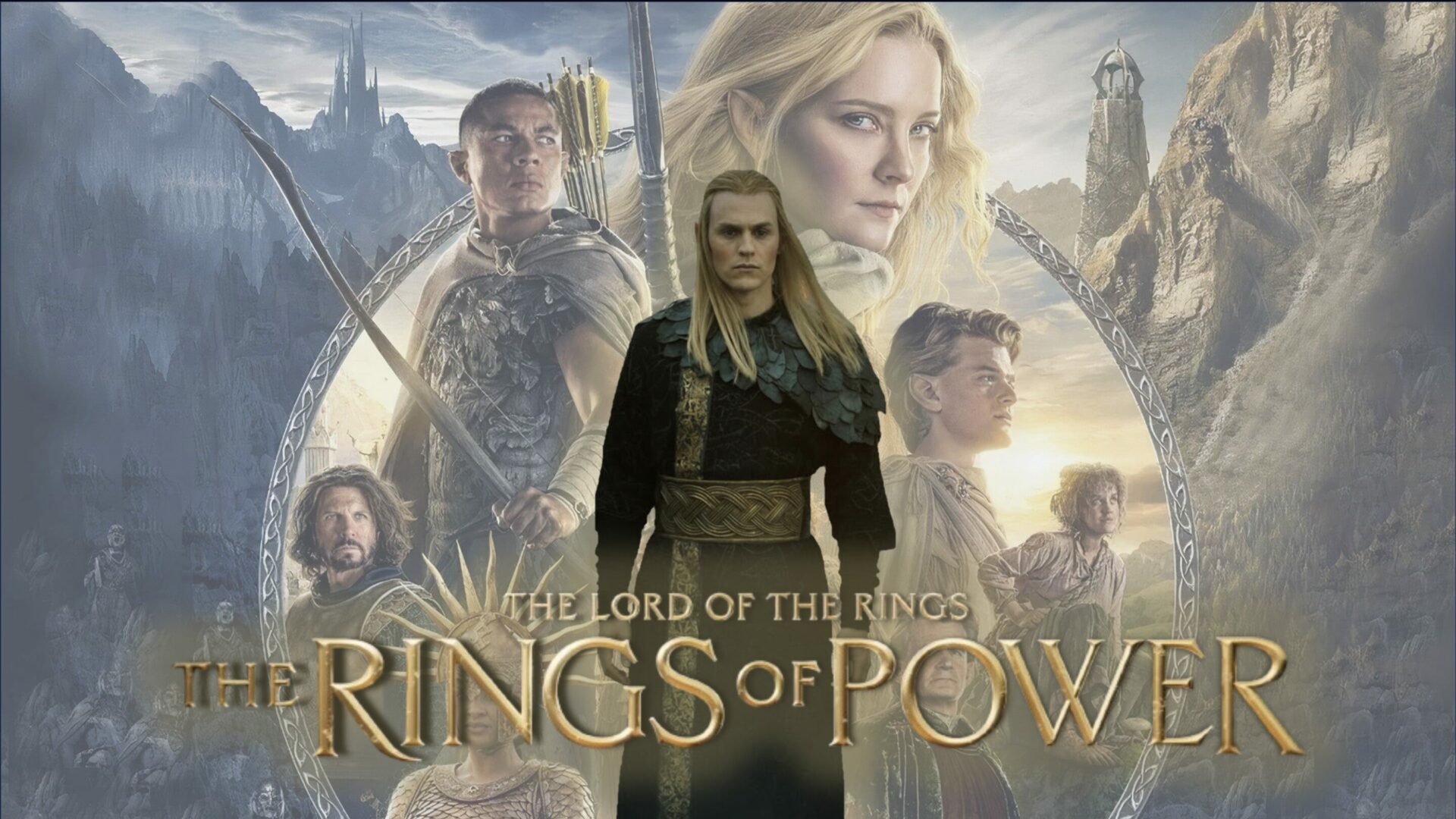
10 Reasons We Love “The Rings of Power” Season Two
Amazon’s epic fantasy series, The Rings of Power returned last year for its second season. Jeff Bezos, Amazon’s founder and one of the richest men on the planet, famously demanded that his company create the new Game of Thrones for their fledgling streaming service. The Lord of the Rings: The Rings of Power was the result of that stab at television greatness.
Season one of The Rings of Power was met with a massive audience and sky-high expectations, both from Tolkien fans as well as general fantasy television fans. And while it was not universally loved, to say the least1, it established itself as a solid hit for Amazon Prime Video. What it did not do is take Game of Thrones mantle. I, for one, am deeply relieved, as that is a mantle I never wanted for a Tolkien inspired adaptation.
Tolkien’s ethos could never coexist with George R. R. Martin’s. Their souls do not align in any appreciable way, and any attempt to make Tolkien feel or act like Martin is stillborn at best. If there is a world where any Tolkien adaptation reflects the grime and ugliness of Game of Thrones, I would not want to live there.
One could argue that Bezo’s was more concerned about cultural impact and not reflecting the hopeless amoral vacuity of Martin’s acclaimed series. I would argue that we do not live in a culture that could ever propel any Tolkien inspired story to that level of success. Before you point out the widespread love of The Lord of the Rings film trilogy, allow me to explain exactly what I am saying.
Yes, The Lord of the Rings films were massive financial and critical hits. There is no disputing that. They are celebrated and loved by many. Yet even at the peak of their popularity, they did not capture the cultural zeitgeist like Game of Thrones did. When Game of Thrones was dominating television ratings, it was inescapable. It was a water cooler event unlike anything I have ever witnessed. Much of that was due to the narrative strength of the show. Regardless of the prurient qualities of the show, for most of its run, Game of Thrones kept viewers on the edge of their seats with twists and turns, shocking betrayals and revelations.
But whether fans of the show want to admit it, a lot of the buzz about the show was precisely the elements that make it such a terrible fit with Tolkien’s worldview. Hordes of people tuned in every week for all the sex, nudity, and blood their hearts could desire. Rings of Power could never satisfy those desires, nor should it ever want to. And therein lies its complete inadequacy to become the next Game of Thrones.
I will forever be thankful that the creators and writers of Rings of Power opted to tell a story that is full of hope and light. They crafted a narrative that bears no resemblance to the dark and twisted world of Westeros. Instead, it channels the best of Tolkien’s overriding conviction that “We have come from God, and inevitably the myths woven by us, though they contain error, will also reflect a splintered fragment of the true light, the eternal truth that is with God”
While it will likely never reach the heights of recognition Game of Thrones reached, I’m grateful The Rings of Power reflects the same “splintered fragment of the true light” Tolkien did.
To highlight some of these reflections of the true light, we’ve decided to discuss, in no particular order, 10 things we love about The Rings of Power Season Two. In each of these, you will find glimmers of Tolkien’s spirit and signposts to the good professor’s vast legendarium.
1. Círdan the Shipwright
I’ve enjoyed most of the casting choices for The Rings of Power but Ben Daniels as Círdan the Shipwright is an absolute homerun. Daniels imbues this much-loved character with wisdom and calm. He is a rock in the midst of the ever-churning waters of conflict in Middle Earth. His interaction with Elrond in the early episodes of Season 2 are some of my favorite Middle Earth moments, giving us a picture of the Elves at their absolute best. Every moment with Círdan is evidence of the deep love and reverence the writers have for Tolkien.
2. Celebrimbor
In Season One, Charles Edwards gave us a blink and you’ll miss him performance as Celebrimbor, the greatest of Elvish smiths. This is not a criticism of Edwards’ abilities. It’s not even really a criticism of the character, though I do think a little more screentime for Celebrimbor in Season One would have beneficial to the show. (I happen to believe each season should be 10 episodes, as opposed to only the 8 we get. But that’s a completely different topic so I’ll let it go for now.)
Season Two fixes anything related to Celebrimbor. Not only is Edwards given more time on screen, the time he is given is some of the best character work in any Tolkien adaptation. Edwards’ Celebrimbor is wise, ambitious, and driven, with an underlining streak of pride running though it all. It is his pride and his desire to create something of lasting value that Annatar is able to manipulate. Their interaction is simply perfect. The give and take. Annatar’s subtle and not-so-subtle manipulations. And when all else fails, the outright hostility and anger.
In many ways, Celebrimbor’s storyline in Season Two is the most Tolkienesque story we have witnessed on screen. For those who only know Tolkien through The Hobbit or The Lord of the Rings, Celebrimbor’s fate could perhaps feel shocking and all too tragic. There is no Wizard arriving with the dawn to the save the day. No Elven army to win the battle. The way Edwards plays the role, it is clear Celebrimbor realizes he is being deceived in some way, but his pride compels him to continue. Eventually, he is able to escape the mind games, long enough to recover his goodness and courage, but his actions lead to the downfall of Elvendom’s crown jewel, Eregion.

3. The Creatures of Middle Earth
While Season One gave us a few creatures – orcs, the worm, wolves, and a few wargs, the show’s focus was primarily on the men, elves, and dwarves. Season Two, while still focused on the main players of the Second Age, gave us a cornucopia of beasts and creatures, each more fascinating than the next.
In the 8 episodes, we were treated to Barrow-Wights, Ents, nameless beasts of the underworld, a Great Eagle, a fuller view of the great worm (sea dragon), Shelob’s brood, Damrod the troll, and a Balrog. None felt forced or like simple easter eggs. Instead, they were woven into the story naturally and with purpose. The map of Middle Earth, along with its inhabitants, became a lot more interesting in Season Two.
4. Númenor’s Encroaching Evil
One area that felt underdeveloped in Season one, was Númenor. In fact, I would argue it was the weakest element of the first season. Season two does much to fix that, though it still has some minor room for improvement. In this season, we finally get to see the true nature of the evil that will capture the hearts of the Númenoreans– their straining for immorality and their resentment towards the Valar for mortal lifespans.
Ar-Pharazôn has already cemented himself as a truly capable villain and it will be fascinating to see how his character continues to develop and gain power. If you know where this storyline ends up, it’s going to be a very interesting ride. And for those who associate power only with physical strength or stature, Ar-Pharazôn probably doesn’t fit your mental picture for the character. I would urge you to grow up and expand your perspective a bit.
5. King Durin III vs The Balrog
Throughout Season 2, following the creation of the 7 rings for the dwarves, we saw King Durin slowly become corrupted by its power. As the season progressed, his relationship with his son Prince Durin grew more and more strained, and his greed in stripping the mountain of all its mithril drew the dwarves closer and closer to awakening the Balrog originally teased in the first season of the show.
In the Season 2 finale, this arc finally comes to a climactic end. King Durin realizes in his blindness he “delved too greedily and too deep” and as a result, jeopardized the entire civilization in Khazad-dûm. Realizing his mistake, King Durin removes the ring that had been corrupting him and has a moment of reconciliation with his son.
He then dies one of the most dwarvish deaths possible, jumping headfirst off a ledge swinging his axe to fight the Balrog. It’s a fight he and the audience know will be lost, yet Durin fights anyway, his collision with the Balrog sealing the two of them back in the mountain. It’s one of Middle Earth’s most epic moments, and it was a brilliant end to King Durin’s story.

6. Tom Bombadil
I respect and agree with Peter Jackson’s decision to leave Tolkien’s most enigmatic character out of the film trilogy. The story they were telling, with the One Ring needing to feel like the most dangerous object in Middle Earth, would have been absolutely sidetracked and derailed with the inclusion of Tom Bombadil – a character who has ZERO interest in the ring and who seems to actually have some form of control over it. Bombadil would have created apparent contractions that would require too much time and exposition to explain to general audiences who came to the films with no knowledge of the books. I am glad Bombadil was left out.
And I am equally as glad the writers for The Rings of Power found a creative way to include Tom Bombadil in the story they are telling. First, where they slot him into the story makes sense, narratively speaking. Second, they present him as knowledgeable but not all-knowing. And third, Rory Kinnear plays Bombadil with just the right dashes of whimsy, oddness, wisdom, and power. And finally, the inclusion of Tom Bombadil gave us the delightful rendition of the song, “Old Tom Bombadil”, and it is everything I could have ever hoped for.
7. The Music of Middle Earth
No film or TV score will ever top Howard Shore’s triumphant music from The Lord of the Rings trilogy. It’s an impossible task and no one should even try. Having said that, what Bear McCreary does for The Rings of Power, is as close as anyone could ever hope to get. If Peter Jackson’s films captured the spirit of Tolkien, McCreary captures the spirit of Shore. He does not lazily copy Shore’s themes and motifs. Instead, he somehow taps into the same vein of creativity and inspiration as Shore, and he has produced a score that is too big, too powerful, and too transcendent for the small screen.
I love The Rings of Power, and McCreary’s amazing music is a big reason why.
8. Annatar/Sauron
Charlie Vickers was a standout in Season One as Halbrand, a man from the Southlands. Of course, if you have seen Season One, you know that he was actually Sauron in disguise. I miss Halbrand, to be honest, but I’m glad Vickers was able to continue to explore the evil of Sauron by creating his new disguise, Annatar – the Lord of Gifts.
Where Halbrand feels very human, with all the accompanying emotions and rough edges, Annatar is otherworldly and angelic. He is above it all, gliding from one manipulation to another. Vickers gets to shine again but in completely different ways than in Season One. Sauron believes he is the hero of this story. Every move he makes is in service of bringing all of Middle Earth under his control so he can deliver true and lasting peace. Just ignore all the bodies he leaves in his wake as he strives for his version of justice.

9. The Siege of Eregion
All throughout Season 2, it was evident that Elrond’s, Galadriel’s, Sauron’s, and Celebrimor’s stories were destined to meet. Fans of Tolkien’s work outside the world of television and film knew that one of the most important events of the Second Age was on the horizon: Sauron’s Siege of Eregion. The show chose to interpret this a little differently, making Adar the one to lay siege to the Elven city. (Critics were quick to point out the difference, but for those that actually paid attention to the show, it was evident that Sauron was orchestrating everything from behind the scenes the entire time.)
What follows Adar’s decision to attack Eregion is a multi-episode epic that is incredibly broad in scope and equally captivating in emotion. Through these final episodes of Season 2, we see Annatar and Celebrimbor’s story come to its tragic end, Elrond and Gil-Galad arrive with a legion of elves to try and counter the orc invasion, and Galadriel continue to try and discover Sauron’s true intentions and secrets. The battle is full of intense film worthy moments, and it is a welcome addition to the Middle Earth canon, joining the likes of Helm’s Deep and the Battle of Pelennor Fields. This battle does not end as those do, however. Eregion is lost, and what little elves remain must retreat to a valley deep in the Misty Mountains, the Valley of Imladris itself.
10. The Scope
Although we were big fans of Season 1 here at Rambling Ever On, one small criticism we had was that at times the show felt a little small. (I attribute a lot of this to the show’s production being halted by covid, but nonetheless.) Númenor specifically, though the landscape was expansive, had tendencies to feel scaled-down. It felt like these scenes rarely had more than 30 or 40 extras in a crowd. Season 2 completely changed that. From the Siege of Eregion to the everything in Khazad-dûm, The Rings of Power felt bold and epic. The production quality is up there with any other TV show on air.
In addition to the physical and visual scope being much bigger in Season 2, the events of the story and the themes were able to be expanded as well. The story of the rings of power themselves is now in full force, and showrunners McKay and Payne were able to capture all that goes into that. The story now has an even further sense of importance, both in context of the show itself and in the entire Middle Earth world. This show more than ever before has felt like it leads right up to the events of the Jackson films, and that is certainly no small feat.

Closing Thoughts
Thanks for reading and we hope you enjoy The Rings of Power as much as we do. Agree or disagree, let us know what you think about Season Two in the comments. There were many moments we didn’t even write about that are just as deserving. The singing of “Golden Leaves.” The first usage of the three rings of the Elves. Gandalf and Tom Bombadil’s wonderful interactions. Narsil!!! We could go on. Again, post your thoughts in the comments. We love to hear from our readers.
- There is a loud and vocal collection of haters on the internet that derive perverse glee from attacking the show. ↩

- Every NEEDTOBREATHE Title Track, Ranked - March 18, 2026
- Go Do Things - February 26, 2026
- 2025 Music Review - February 2, 2026
Discover more from Rambling Ever On
Subscribe to get the latest posts sent to your email.

Great thoughts! I enjoyed Season One well enough, but thought Season Two was a huge improvement. Sauron’s manipulations were particularly cool.